

 hasan tariq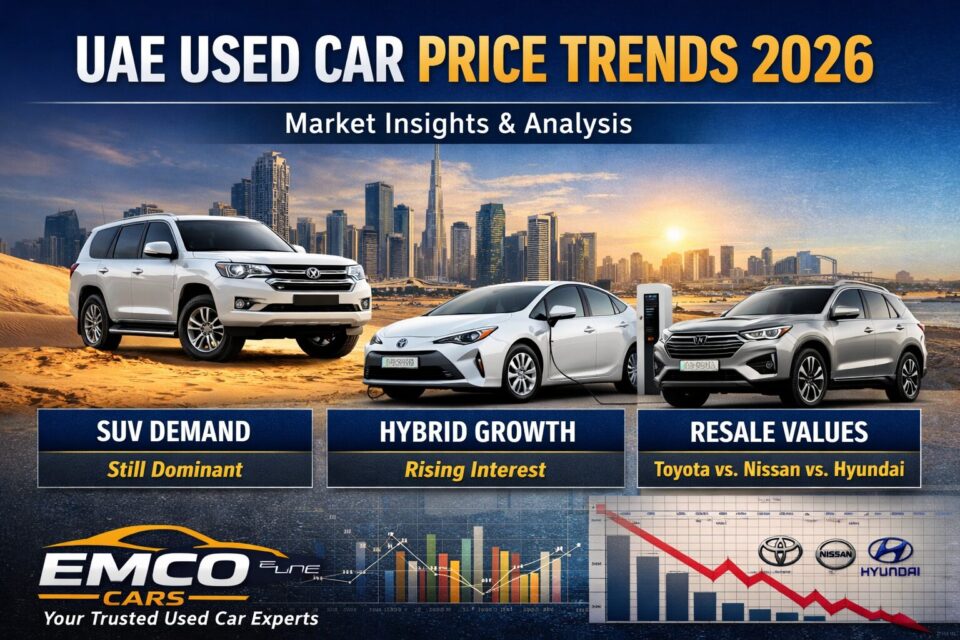
What’s happening, why it’s happening, and how it affects you
As of early 2026, the UAE used car market is undergoing a structural shift. After several years of price volatility caused by global supply chain disruptions and new car shortages, the market is stabilizing. Inventory levels have improved, buyer behavior has evolved, and new competitors particularly Chinese manufacturers are influencing pricing dynamics.
This analysis explains the current trends in clear terms so buyers and sellers can make informed decisions.
1. Overall Price Movement in the UAE Used Car Market
General Price Correction Continues
Following the pandemic-era supply shortages, used car prices reached unusually high levels between 2021 and 2023. As global production normalized and new vehicle availability improved, the UAE used market began correcting.
In 2025, average used vehicle prices declined approximately 8–12% compared to 2024 levels across several segments, including economy cars, SUVs, and select luxury vehicles. This correction is continuing into 2026, although at a slower and more controlled pace.
Why This Is Happening
- New car supply has stabilized, reducing pressure on the used market.
- Increased listing volumes have created more competition among sellers.
- Buyers are more price-sensitive and data-driven than before.
What This Means for You
For buyers:
- Greater negotiating power.
- More options at realistic market values.
- Reduced urgency compared to peak shortage years.
For sellers:
- Accurate pricing is critical.
- Overpriced listings remain unsold longer.
- Market value alignment determines sale speed.
It is important to note that not all vehicles are declining equally. High-demand SUVs and select premium models continue to hold value better than average sedans or less popular segments.
2. SUVs Remain the Most In-Demand Used Segment
Sport Utility Vehicles continue to dominate search activity and transaction volumes across the UAE.
Highly searched and in-demand models include:
- Toyota SUVs such as the Land Cruiser and Prado
- Nissan SUVs such as the Patrol
- Mid-size family options like the RAV4 and Tucson Premium options including Range Rover and Mercedes G-Class
Why SUVs Are So Popular in the UAE
- Larger families prefer spacious vehicles.
- Strong off-road culture supports demand for capable 4×4 models.
- Higher seating position and perceived safety.
- Strong resale track record.
Pricing Insight
SUVs generally retain value better than sedans or compact cars. Large Japanese SUVs, in particular, maintain strong resale performance due to reliability, brand trust, and regional suitability.
Luxury SUVs remain stable but move more slowly due to a narrower buyer pool.
3. Hybrid and Electrified Vehicles: Growing but Still Developing
Hybrid vehicles are steadily increasing in the UAE used car inventory. Listings have grown faster than traditional fuel-only vehicles in certain segments.
Common hybrid options in the UAE market include:
- Toyota Prius
- Toyota RAV4 Hybrid
- Lexus NX Hybrid
Why Hybrid Demand Is Increasing
- Rising awareness of fuel efficiency.
- Lower long-term running costs.
- Buyers seeking a balance between electric efficiency and petrol reliability.
- Perception of “future-proof” ownership.
Pricing Behavior
Used hybrid prices are stabilizing. In some cases, well-maintained hybrid SUVs have shown slightly stronger price resilience than comparable petrol-only models. However, resale still depends on battery condition, service history, and buyer confidence.
The segment is growing, but it has not yet overtaken traditional petrol SUVs in total market share.
4. Chinese Brands: A Major Structural Shift in the Market
Chinese automotive brands are rapidly gaining visibility and market share in the UAE.
Manufacturers such as Jetour, Chery, and others have increased their footprint in both new and used markets. Their share of buyer demand has grown significantly over a short period.
Key characteristics of Chinese vehicles in the UAE:
- Lower initial purchase price.
- Competitive features and technology packages.
- Longer warranty coverage.
- Increasing availability in used inventory.
Some models have demonstrated strong short-term value retention, with certain vehicles maintaining over 80% of their value after one year.
Market Impact
The expansion of Chinese brands has:
- Increased overall vehicle supply.
- Introduced more competitive pricing pressure.
- Provided buyers with affordable alternatives to Japanese and Korean brands.
- Contributed to softening resale values in certain older petrol segments.
While resale values are still developing, buyer confidence in Chinese brands is steadily improving.
5. Resale Value Comparison: Japanese vs Korean vs Chinese Brands
Understanding brand-based depreciation patterns is essential when buying or selling.
Japanese Brands
Brands such as:
- Toyota
- Nissan
These brands consistently demonstrate strong resale performance due to:
- Proven reliability.
- Strong regional service networks.
- High parts availability.
- Long-standing market trust.
Buyer perception: Japanese vehicles are considered low-risk used purchases with predictable depreciation.
Korean Brands
Brands such as:
Characteristics:
- Competitive pricing.
- Feature-rich interiors.
- Improved reliability in recent generations.
- Slightly faster historical depreciation than Japanese brands.
However, the gap between Korean and Japanese resale values is narrowing as product quality improves.
Buyer perception: Good value-for-money option with modern features at lower upfront cost.
Chinese Brands
Emerging Chinese brands:
- Enter at lower price points.
- Offer advanced technology and design.
- Provide longer warranty coverage.
- Still developing long-term resale history.
Buyer perception: High value at purchase, but long-term depreciation patterns are still being established.
6. Practical Takeaways for Buyers and Sellers
For Buyers
- The market is more balanced than during shortage years.
- Negotiation opportunities are stronger.
- SUVs remain safer choices for resale retention.
- Hybrids are becoming attractive for fuel-conscious drivers.
- Chinese brands offer strong value but require resale consideration.
For Sellers
- Competitive pricing is critical in 2026.
- Vehicles with full service history command stronger offers.
- Clean inspection reports increase buyer confidence.
- SUVs and hybrids generally sell faster than entry-level sedans.
Summary of 2026 Market Direction
| Trend | Current Situation | Market Effect |
|---|---|---|
| Used car prices | Down approximately 8–12% | Improved buyer leverage |
| SUV demand | Remains strong | Supports resale stability |
| Hybrid vehicles | Growing steadily | Increasing buyer interest |
| Chinese brands | Rapid expansion | More competition and pricing pressure |
| Japanese vs Korean | Japanese still lead in resale | Korean brands closing the gap |
Final Outlook
The UAE used car market in 2026 is stabilizing after years of volatility. Buyers now operate in a more rational pricing environment, while sellers must adapt to competitive listing conditions. SUVs continue to anchor resale strength, hybrids are gradually expanding their footprint, and Chinese brands are reshaping the competitive landscape.
For anyone entering the market whether buying or selling data-driven pricing and realistic expectations are now more important than ever.